
For a residential developer, the difference between digital marketing and digital advertising is the difference between an asset that compounds for years and a campaign that stops the moment you stop paying. Both have a place. Confusing them is a costly mistake.
Five practical ways the distinction shows up in a developer’s marketing.
1. Digital marketing is much bigger than advertising
Social ads and Meta campaigns are one slice of digital marketing. The full surface includes: your website (and how well it converts), your search authority on Google, your visibility in AI assistants like ChatGPT and Perplexity, your email and WhatsApp nurture sequences, your YouTube content, your CRM and the data it’s collecting, your owner referral system, your post-close experience.
Most regional developers spend 80% of their digital budget on the smallest slice (paid social) and underinvest in everything else. The result is a leaky bucket. The leads come in when the budget is on, the leads stop when the budget is off, and the brand never builds an asset that produces leads on its own.
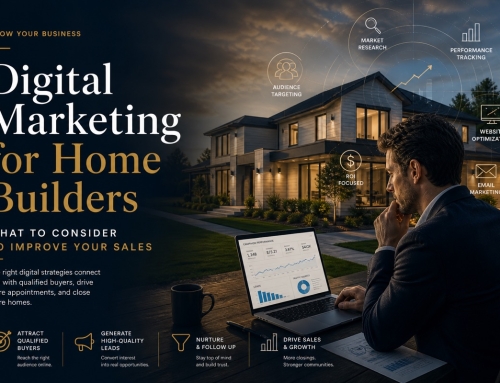
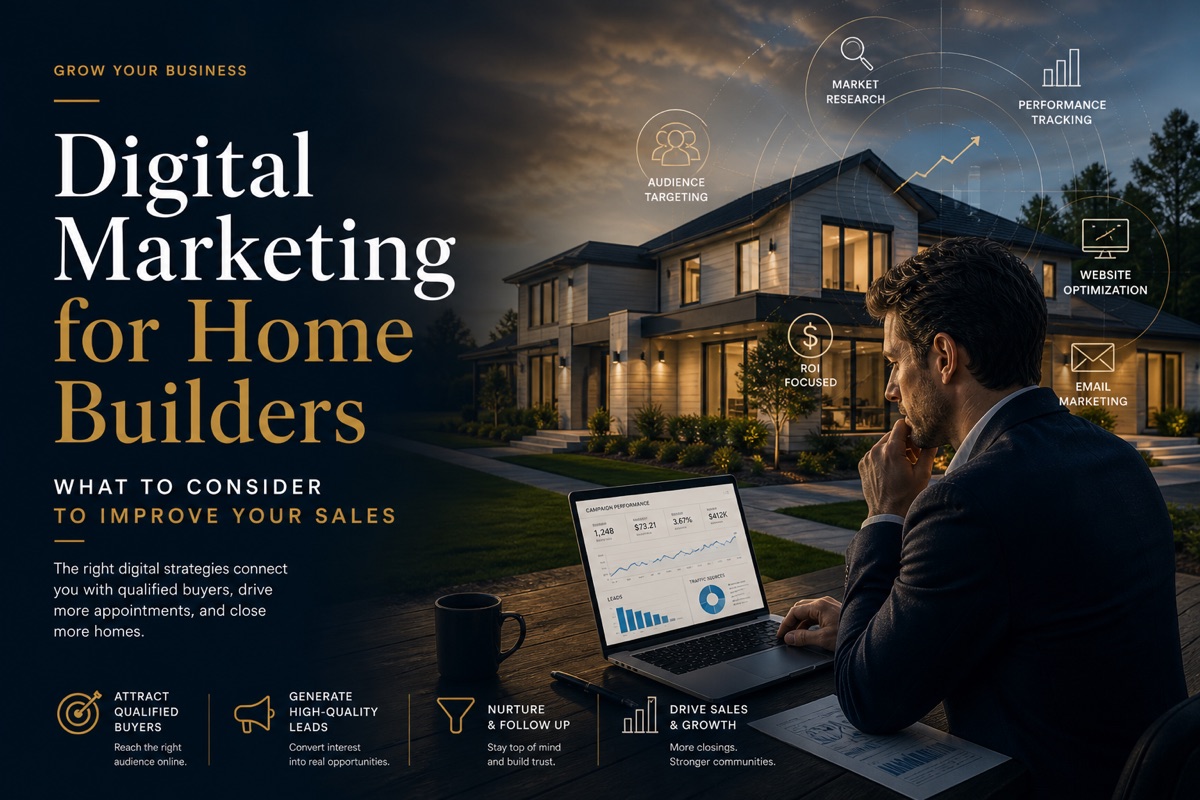
For a complete look at what real digital marketing for a developer covers, see Digital Marketing for Home Builders: What Actually Works in 2026.
2. Social media is not the answer to sales by itself
Some products sell well on social. Most considered purchases — including a new home — don’t.
Social platforms have always been about distraction, entertainment, and discovery. They’ve evolved into interest media (algorithmic feeds based on what you care about, not who you follow), which makes them better for awareness and worse for direct sales than they used to be.
For a residential developer, social is part of the discovery layer. It introduces buyers to the project. It does not, by itself, close them. The handoff to your CRM, your sales advisor, your tour, your nurture sequence — that’s where the close happens.
Treating social as the entire sales engine is one of the most common (and most expensive) mistakes regional developers make.
3. Social can distract from the real objective
Companies often spend significant resources chasing followers, likes, comments, engagement metrics — none of which directly produce closed units.
Engagement metrics are inputs, not outputs. The output that matters is reservations, then signed contracts, then delivered units. If your reporting doesn’t connect engagement to that pipeline, the engagement isn’t useful.
A more useful frame: imagine you owned a TV channel whose goal was to attract a specific kind of viewer. What shows would you produce to attract them? How would you convert those viewers into buyers? Run your social like that — your own channel, with deliberate programming aimed at a specific buyer.
4. Social ads work as an auction — and stop being profitable
We covered this in detail in The Digital Advertising Trap. The short version: paid social runs on auction pricing, and as more developers compete in the same county for the same buyer, the cost-per-lead climbs. Returns deteriorate over time.
The defense is owned digital assets — your own website ranking organically, your own email list, your own owner referral system, your own content visible in AI search. Those don’t require a continuous bid. They keep producing once they exist.
For more, see 7 Essential Digital Marketing Tools (the post that walks through which tools to invest in for the long term).
5. Real digital marketing helps the business adapt
The objective that actually matters is building a machine: capture qualified leads, convert them to reservations, satisfy them as owners, generate referrals, repeat. Real digital marketing supports every part of that machine. Digital advertising supports only the first step.
The buyer’s research process now includes AI assistants as the first stop. Your search authority. Your content. Your owner reviews. Your AI search citations. All of it shapes what a buyer sees before they ever reach a sales conversation.
A developer running ads only is competing for the second-best impression in the buyer’s journey. A developer running real digital marketing is shaping the first.
Conclusion
Digital marketing is not the same as digital advertising. It’s not even mostly digital advertising. It’s a complete, integrated system across positioning, content, search, AI search, paid, CRM, sales, and owner amplification.
This is the MERCA framework — Map, Emotion, Route, Conversion, Amplification — built specifically for residential developers. Paid advertising sits inside the Route block, which is one of five.
For the full system, see the Real Estate Growth System.